
The Purpose Chasers Podcast turning adversity into ambition & setbacks into setups for success
Hosted & Founded by Mark Crandall, it features raw stories from creators, entrepreneurs, and artists who refused to quit plus unfiltered talk on business growth, marketing, and purpose.
If you’ve been knocked down or counted out, this is your space to rise, rebuild, and live on purpose.
Listen or Watch to the Podcast Now:


10th
Experience
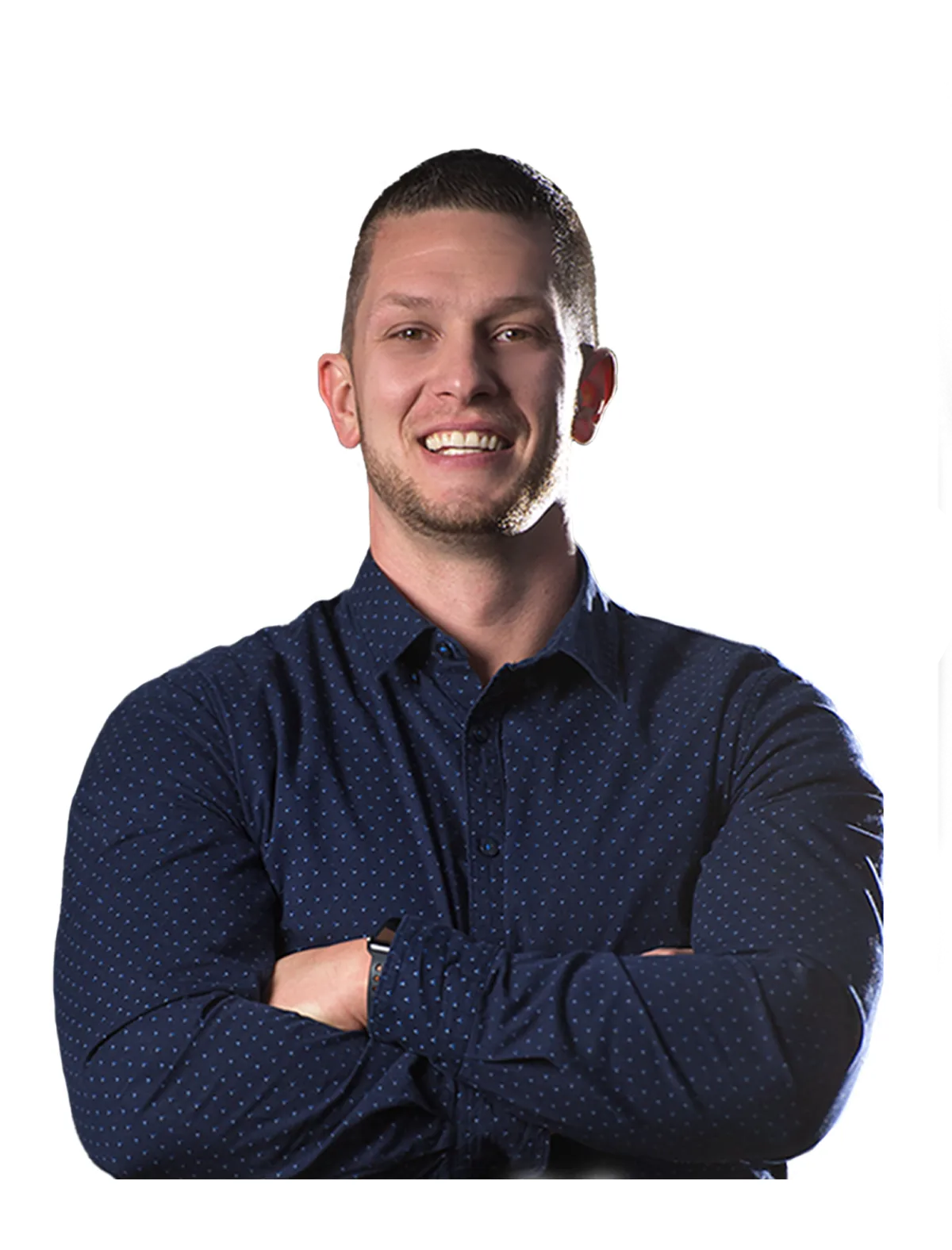
Mark Crandall Founder Host of the Purpose Chasers & expert Digital Marketer has been FEATURED ON:
ABC • NBC • CBS • Go HighLevel • & More.
The "I Can't Because" Trap: What Insurance Can Teach You About Breaking Free | The Purpose Chasers Podcast
There's a phrase that kills more dreams, stalls more businesses, and locks more people into lives they didn't choose than almost anything else:
"I can't because…"
I can't because I have kids. I can't because I don't have the money. I can't because the market's too saturated. I can't because the regulator won't let me.
Bryan Falchuk has heard every version of that sentence, and he's spent 26 years in one of the most constraint heavy, risk averse, change resistant industries on the planet proving that it's almost never actually true.
Bryan is the President and CEO of PLRB, a best selling author of the Future of Insurance series, and a former personal development coach who brought the exact same frameworks he used to help individuals overcome personal obstacles to an industry that, by its own admission, still runs on technology from the 1980s.
When he came on The Purpose Chasers, the conversation went somewhere I didn't expect. Because what started as a conversation about insurance ended up being one of the most honest explorations of how humans resist growth, and what it actually looks like when they stop.
Watch the Full Interview on The Purpose Chasers YouTube Channel:
The Insurance Industry Is Just a Mirror
Here's the thing about insurance that Bryan said early in our conversation that reframed everything:
"It's a losing scenario no matter how you slice it. You buy it because you have to, or because you're afraid if you don't. You hope you never use it. And you're kind of pissed off if you do."
But here's what he followed that with: that's exactly why there's so much opportunity.
Most people look at a losing scenario and walk away. Bryan looked at it and saw 26 years of meaningful work still ahead of him.
That's the first lesson from insurance that applies directly to your business and your life. The harder the problem, the more open space there is for someone willing to stay.
Self Help Didn't Stop at Individuals. It Scaled to Industries.
Bryan's origin story is unusual. Before he became the voice of insurance transformation, he wrote a personal development book called Do a Day, a framework for showing up and doing better one day at a time. Then he wrote The 50 75 100 Solution, a book about relationships.
Neither of those was written for the insurance industry. But as he sat in lockdown during COVID, listening to insurance companies describe their struggles, he realized something: the structure of his self help books, identify the problem, understand it personally, apply it to specific situations, pull the lessons, was exactly the structure these companies needed.
"The self is an entire industry or a company," he told me. "It's all the same. It's all personal development, no matter how you slice it."
That insight is worth sitting with. Because if you're in business, if you're building a team, if you're trying to create lasting change in an organization, you're not doing business development. You're doing personal development at scale.
The Constraint Trap and Why "How Might We?" Breaks It
Here's the core of what Bryan teaches, and it's deceptively simple.
When we say "I can't because," we've already made a decision. We've decided the upside is zero. And if the upside is zero, the cost benefit analysis is over before it starts. No one pours resources into a problem they've already decided is unsolvable.
But "How might we?" changes the equation.
It doesn't promise success. It doesn't pretend the constraints aren't real. It just asks: what if, for a moment, we set the obstacle aside and started dreaming about the outcome? Because once people start dreaming, something happens. They start caring about the destination. And once they care about where they're going, they'll find a way around, over, or through whatever was blocking them.
Bryan described working with his own staff recently. There was a regulatory requirement they thought would require significant development work. They spent time dreaming toward the end state, and the person leading the charge eventually realized they already had the system capability they needed. They just hadn't been using that piece of it in this way. The constraint disappeared because the destination became clear enough to see past it.
That's the shift. Not the absence of the obstacle, but the discovery that it doesn't have the power you thought it had.
What a 100 Year Old State Agency Taught Me About Culture Change
Bryan's most powerful story in our conversation was about a company that, on paper, should have been impossible to change.
A California state workers' compensation insurer. Over 100 years old. Fully unionized. Every employee a civil servant. Actual politics layered on top of corporate politics. The kind of organization that, when you describe it at a dinner party, people just nod slowly and say "yeah, that's not changing."
Except it did.
Through design thinking training, every single employee from the phones to the CEO, the company transformed its culture from red tape to curiosity. Instead of "we can't because the union" or "we can't because the regulators," staff at every level were asking how might we.
Then COVID hit.
They had no remote work infrastructure. Everyone had desktop computers, big monitors, keyboards, the works, and none of the remote access tools to use them from home. California locked down fast.
So what did they do?
They got chairs. They went in shifts. They wheeled their computers out to the parking lot. They loaded them into their cars and brought them home.
Not sophisticated. Not a six figure technology solution. Just: we have chairs with wheels and we have cars. How might we?
Bryan called it his Apollo 13 moment. Because the story of that company isn't about technology. It's about people who felt seen, valued, and unified enough to solve a problem that had no precedent. That's what culture transformation actually looks like. Not a re org. Not a rebranding. A staff that asks different questions.
Watch the Full Interview on Spotify
The Niche Is the Garden, Not the Cage
One of the most honest moments in our conversation was when Bryan talked about his own turning point.
For a while, he'd been fighting against the label of "insurance guy." He wanted to be seen as a broader thought leader, personal development, human behavior, all of it. And while his message connected with some people in that space, there was always someone else with more apparent authority in the room.
"I was fighting, admitting this is where my place is," he said. "I was seeing it as a constraint. And what I realized is it's not a constraint. It's actually a garden."
He shifted the frame from "I'm limited to insurance" to "I can grow and nurture here. I'm as much the plant as the gardener."
That reframe matters for every entrepreneur, every coach, every consultant who's ever felt like their niche was a box instead of a launchpad. Specificity isn't a limitation. It's leverage. Bryan's results are inside an industry he once felt trapped in, and now he's the person that industry calls.
The Takeaway for Purpose Chasers
At the end of our conversation, Bryan said something worth closing with:
"Look, if I can be this passionate about insurance, imagine how much passion you can have for something. How might we care about what we're working in and see the possibilities in it? And then you can't help but be passionate and excited about it."
That's the whole thing, isn't it? The problem isn't the industry. The problem isn't the constraints. The problem is we stopped asking how. And once you start asking again, really asking, with the willingness to dream your way to an answer, you're already halfway there.
Connect with Bryan Falchuk: https://www.linkedin.com/in/bryanfalchuk
Ready to identify what's actually holding your business back? Start by grabbing a free copy of the Happy Check Book, Visit thehappycheck.com to learn more.


Where adversity fuels ambition and setbacks become setups for something greater. Hosted by entrepreneur and consultant Mark Crandall, each episode features raw stories from creators, entrepreneurs, and artists who refused to quit—alongside real talk on business growth, marketing, and chasing your calling.
Pages
Listed On
© Scale to Sale Consulting, LLC & Purpose Chasers, LLC - All Rights Reserved.